
The Stronghold of Unforgiveness
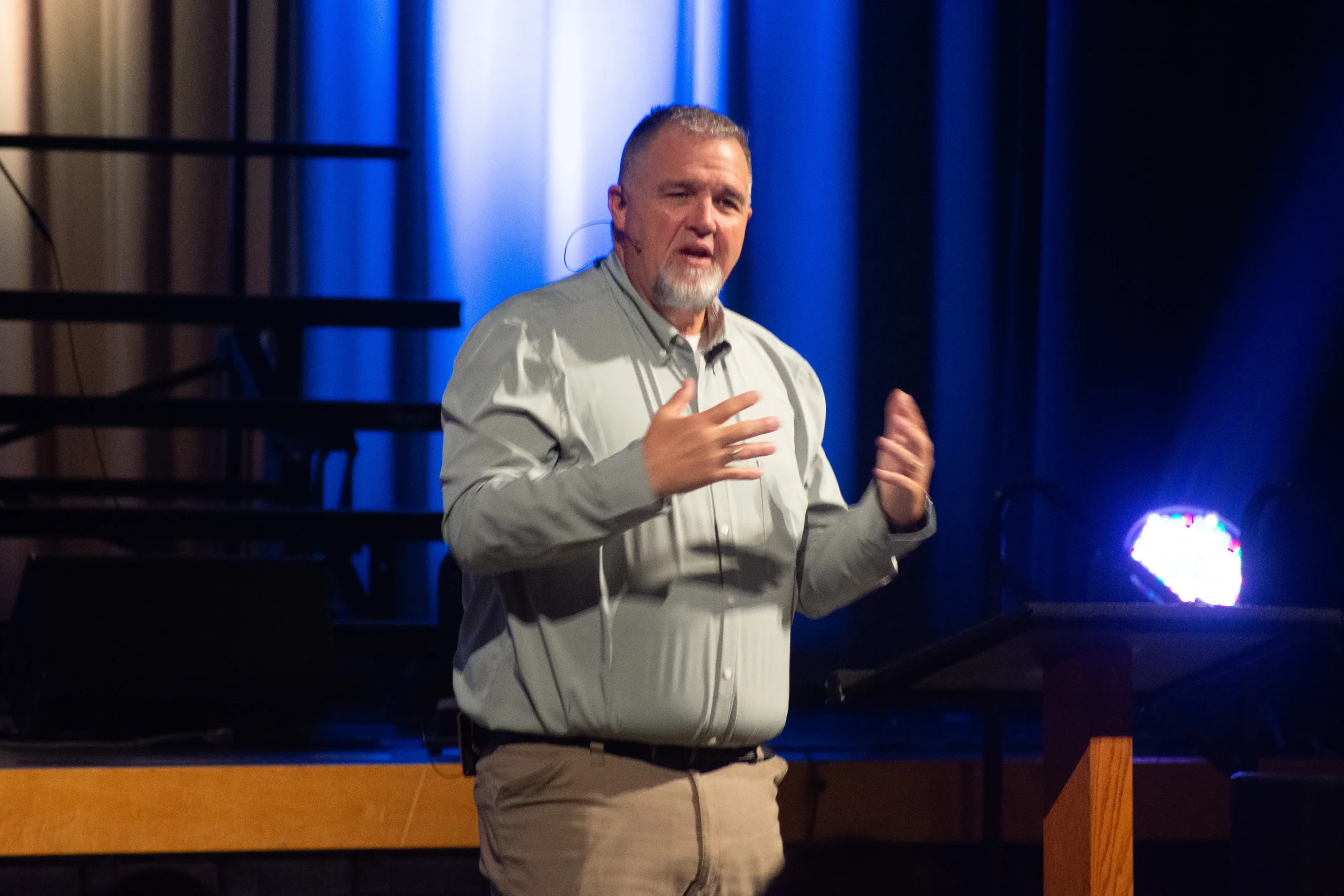
Speaker : Maury Brenneman
Topic : Forgiveness
Because God has canceled our unpayable debt, forgiveness must become our lifestyle—not just for others’ sake, but to break the spiritual torture and stronghold that unforgiveness brings to our own souls and our church.
All right. Turn with me if you would in your Bibles to Matthew chapter 18. Matthew 18. And we're going to start at verse 21 this morning in the section some translations call the unforgiving servant or the unmerciful servant parable. So, Matthew 18 starting with verse 21. And I am going to be reading to you from the New King James Version in case it sounds a little different than yours. Everybody there? Wow. All right. Now we go. Then Peter came to him and said, "Lord, how often shall my brother sin against me and I forgive him up to seven times?" And Jesus said,"I that's not what I said to you. Not up to seven times, but up to 70 times seven." Therefore, the kingdom of heaven is like a certain king who wanted to settle accounts with his servants. And when he had begun to settle accounts, one was brought to him who owed him 10,000 talents. Now, folks, 10,000 talents is something you couldn't pay back in a lifetime. But as he was not able to pay, his master commanded that he be sold with his wife and children and all that he had, and that payments be made. The servant therefore fell down before him, saying, "Master, have patience with me, and I'll pay you all." Which was impossible.
The master of the servant was moved with compassion, released him, and forgave him the debt. But that servant went out and found one of his fellow servants who owed him a hundred dinari, just a couple of bucks. And he laid hands on him and took him by the throat, saying, "Pay me what you owe." So his fellow servant fell down at his feet and begged him, saying, "Have patience with me, and I'll pay you all." And he would not, but went and threw him into the prison till he should pay the debt. When his fellow servants saw what had been done, they were grieved and came and told their master all that had been done. Then his master, after he had called him, said to him, "You wicked servant. I forgave you all that debt because you begged me. Should you not also have had compassion on your fellow servant just as I've had pity on you?" And his master was angry and delivered him over to the torturers until he should pay all that was due to him. Jesus said, "So my heavenly father also will do to each of you if from his heart to each if if each of you from his heart does not forgive his brother his trespasses." Father, we are so grateful for your word and we are so thankful for your protection this morning. And we pray asking that we could rest in that today. Thank you for the grace that you've given us, for the word that is living and active and so relevant to our life. Thank you for showing us yourself that we may know you. We thank you for these things in Jesus' name. You know, we've been learning together of what it means to to follow Jesus.
know him as he is, to follow him closely, and uh so that others can so that others can know him. We want other people to know Jesus. We want other people to come into the kingdom and experience what life reconciled with our heavenly father is like. And so we press in and in knowing him as he is and following him. And what we've learned over the last few weeks is that it's impossible to do this and live by the patterns of thinking that are in this world. lust of the flesh, lust of the eyes, and the boastful pride of life of which we've been speaking. Because these are rooted, if you remember last week's message, these are rooted in the character of the one who was cast out of heaven, the evil one that's called the Satan or devil or Lucifer and or or beelub. We've got all kinds of names for him, but this was the evil one that was cast out of heaven because these are his qu character qualities. Lust the flesh, lust the eyes, boastful pride of life. He wanted to be God instead of trusting God. And so everything about these values, everything about them stands opposed to the goodness into the rule and reign of God in our lives. And from that moment when Adam sinned, when sin entered in sin entered into the world and the and it became the nature in mana of man and woman to desire to rule themselves and to live by these values of the world, these three values instead of coming under the rule and the reign of God and trusting in his goodness. And you know what? Even as followers, we still wrestle with this today, don't we? Just so you know, this means yes here. This means no. I don't know. But as followers, we still wrestle with this and and and but and nowhere nowhere is the tension between flesh and the spirit more real than it is in our relationships, especially when someone lets us down or betrays us or causes us pain.
Because the natural response, and when I speak of the natural response, I'm speaking of the response of the sinful nature is to to is to strike back. It's to want judgment on that person. It's to react. We naturally want to be vindicated. We naturally want vengeance or or revenge. And folks, none of that is of the spirit. None of it. Those are all part of the values of this world. They're the values of the evil one to want those things. And it's what it's actually doing is it's actually rejecting the goodness of God. It's insisting on getting our own way. Now, the counterpart to all of this is the way of Jesus. And the way of Jesus is to forgive, to trust the justice and the mercy and the goodness of our father. Now, just prior to the words in our passage this morning, Jesus had just gone through with his disciples and given them this this this process, this beautiful process of how to of how to restore another person when they sin against you. And it must have really struck Peter. It might have must have seemed kind of involved or or maybe it even a lengthy process because we can see by his response. So, Lord, how many times am I going to how many times should I do this? up to seven times. Now, you got to understand where this is coming from because the religious tradition of the day, the normal thinking of the day was that three times was really all you ever needed to do as far as forgi in in forgiving someone. Three times was was a lot. And if you took it to the fourth time, you're being extravagant with your forgiveness. You're being extreme with your forgiveness. So Peter's sitting here saying, "So what do I do? Do I take it to seven times?" He's trying to figure this whole thing out. In other words, not only is this process that you've given us for restoration and reconciliation does it seem kind of involved and lengthy, but how many times am I supposed to go through with this if the guy keeps doing to me over and over without repenting, without changing? Well, if you look at Jesus response, it wasn't about numbers. It wasn't about keeping a record. What he was doing was Jesus was revealing the heart of God. He said to him, "I didn't say to you up to seven times. Instead, I'll tell you what, 70 times seven." And we may be like Peter, but they don't repent. They keep doing the same thing over and over again. When is enough enough?
And Jesus said, "7* 7." So then that means I should keep a tally book. And every time somebody offends me, I'm going to take it all the way up to 490, but once you get to 491, man, you're mine. Is that what Jesus was teaching? We know that's not what he was saying. You see, what Jesus is teaching us is that we forgive as often as forgiveness is needed. You see, here's the thing that we've learned in our family. That forgiveness is a lifestyle for those who know him and who follow him. It's a way of life. It's a way of living. We live with our arms with our hands open. We live life forgiving as people hurt us. We forgive when we forgive each other when my wife says something to me that hurts my feelings. We live a lifestyle of forgiveness. It's a lifestyle. It's the lifestyle of the kingdom. You know, it's this value of of forgiveness. It's one of those values that we have in the kingdom of God that directly opposes all of the values of this world because you think about think about some of our favorite movies and and a lot of them that are out there today. It's always about the underdog or the one being trotten on coming back and getting justice and and hammering the ones that did them wrong. And and we get into this stuff and we're always rooting for that guy to get his to exact his his revenge, to exact his vengeance. And folks, that's the way of the world. That's the way this world thinks. That's not part of our culture in the kingdom of God. Vengeance and revenge, getting even is not part of our culture. That's part of the value system of the world. that falls into those three categories. That falls into the character of Satan.
It's not part of who you and I are. The value system that we live by directly opposes that value system. Forgiveness becomes a way of life for those who follow and those who know Jesus. Becomes the way we live life. And then listen, here's a big secret. It doesn't require anything from the other person or the other person's. It doesn't require a thing on them. They don't have to acknowledge what they did. They don't have to say they're sorry. They don't have to repent. I mean, it would be really nice if they would, but they don't have to because in living this lifestyle, we forgive not based on their response or reaction or actions. We forgive because it's the way of Jesus. We forgive because that's the lifestyle Jesus lived. A lifestyle open before his father, forgiving those who hurt him. As a matter of fact, if you remember correctly, it was part of it was some one of his some of his last words when he hung on the cross. Father, forgive them. He forgave the sins of mankind even when we said we were. The scriptures say enemies of his. Even when we didn't know that we needed forgiveness, he forgave us. That's how Jesus did it. The other thing is we don't even have to tell them we've forgiven them. You know, that just that just kind of seems condescending, doesn't it? You know what, Jan? I just want you to know I forgive you for the way you talked to me the other day. That's just kind of condescending, isn't it? sounds a little bit I am mighty. We don't have to go to people and tell them we forgive them. That's something that's between you and your father. It's a lifestyle. So, we don't we don't have to make a big deal of it. We just it's between me and my father. It's the way of Jesus. I just deal with it openly with Jesus with our father. We don't have to make a big deal of it with each other. Now, we it may need we may need conversations. We may, but come on. And I know this goes against everything in our culture, everything that our flesh tells us is right and good and what we need. So when we sense injustice or we believe that someone has wronged us, we want justice, not mercy. Justice. And I actually we really aren't asking for justice. What we want is judgment. We want them punished. We want them to suffer.
We want them to know how much they hurt us. Has nothing to do with justice. Because if it were about justice, that would include us in our actions as well. Because God's justice isn't just directed at one person. And he said, "However and whatever you demand, by that same measure, it'll be measured out to you, pressed down, shaken about. You condemn, you'll be condemned. You show mercy, you'll be given mercy. You forgive, you'll be forgiven by the same measure." You know, and I know that it just seems impossible, doesn't it, to to forgive real evil, to forgive abuse or molestation or betrayal or cruelty or deep injustice. But if I understand, if I can grab hold that to hold on to that per hurt, to hold on to that wound, to hold on to the pain, that sense of injustice causes more damage to me than it does to anyone else. It doesn't do anything to the person that I'm holding it against. They probably don't even know or if they do, they don't care. Where it does the damage is my soul when I hold on to it. It's my soul that experiences the bondage. And if I could just grab a hold of that, that it does more damage to me than to anyone else. Because here's what happens, friend. unforgiveness, offense soon turns to bitterness. And bitterness is poison to the soul. If I got poison in my eye, what am I going to do immediately? I'm going to flush my eye out. If I ingest poison, I'm going to induce vomiting. If I can't get it that way, I'm going to go to the hospital and get it pumped out of my stomach. I'll do anything I can do to get that poison out of my system, out of my body. We would do everything that we could do to to make that happen. Listen to me. Bitterness, unforgiveness, holding on to offense is poison and it destroys the soul. Once it gets into your system, it's so hard to get rid of it. It affects every part of our thinking. It affects every relationship we have. Have you ever been around someone who's bitter? Yes. No. And if you're shaking, no. Maybe you're the one. No. I joke. I joke. I joke. But that's not it's not fun experience, is it? because we become critical and we become overly sensitive and negative and it's oh we we're always suspicious of everyone's motives and we're unable to enjoy life and we're unable to enjoy people because we see the dark side of everything.
We begin to doubt everything except those that are in agreement with us. Bitterness will eat away at the heart. It'll eat away at the soul if it's left unchecked, if it's goes by without that forgiveness. It's forgiveness that sets us free us free. How many of you know that you could get your revenge? You could get your vengeance. You could get your judgment and it does nothing to the pain that's inside of you. Nothing. The only thing that sets us free from that wound is to release it and let it go to forgive. It's forgiveness that frees us. And it's, you know what, it's not what many assume it to be. Because forgiveness is not condoning abusive or hurtful behavior by forgiving them, by releasing them. We're not saying that what they did was right. We're not agreeing with what they did. It doesn't demand that we stay in those situations. And it doesn't demand that we hang out with those people or trust them. It's not releasing someone from the justice of God. As a matter of fact, when we forgive and we release it to the father, we're just turning it over to his justice and his mercy. And you and I know, come on, you and I both, all of us know that there's a consequence to unrighteous. There's always consequences to unrighteousness.
We've all suffered at at the hands of unright of our unrighteous acts, haven't we? Yes. We all know that that and so when we forgive, when we release it, it's not saying that that we're not that God's not going to be just, but what we're doing is we're just releasing it to him so that he can be just and merciful. Because I'm going to tell you something, friend, God is the only one who can be perfectly just and perfectly merciful. I can't. Can you? He's the only one. And so, we just release it to him. And here's the other thing. It doesn't mean that you're going to forget what happened to you. When it says that God remembers our sins no more but casts them away, it doesn't mean that that he loses it from his memory. What it means is he's not holding it against us. He's not keeping it at our record. Listen, this is not about pretending our pain and our wounds don't exist. It's about releasing those offenses and allowing God to begin his healing work in us.
And he won't do it if we continue to hold on to the offense. If we continue in our unforgiveness, if we continue demanding vengeance or vindication or revenge, we will not be healed. As a matter of fact, I believe that's what Jesus meant when he said what he when he said what he said in verses 34 and 35. He wasn't talking about a apocalyp apocalyptic torment there. He wasn't talking about hell. He's talking about the torture and the torment that unforgiveness does to our soul. Please, please hear me this morning. I'm not trivializing those who have been devastated by people that you should have been able to trust. And in no way would our father want anyone to continue to be around those who continue in this pattern of behavior. And I'm going to tell you too that if you're in this situation where you're being abused or molested and you're afraid, please come to us and let us help you get out of it. We want to do that for you. See, forgiving someone isn't about excusing wrong. It's not about ignoring the pain. It's just about releasing it into God's hands and trusting him with our hurt and with our pain because he's the healer. He's the healer. And you know sometimes in the course of events the right thing even in forgiveness is to is to expose the offense to the proper authorities. I mean that's go God said that's why he put authority civil authority on earth to exact the sword to take the sword and exact his wrath on the evildoer on those who won't come under his righteousness.
That's why he gives the the sword to the evil authority. Sometimes it's it's right to expose that. A while back, one of my daughters was underage and she was taken advantage of sexually by an older man. And when I fi found out about it, I called the state police and I pressed charges and he was arrested. When the DA called after a season and asked me what kind of punishment did I want him to ask for, first of all, I was amazed. I thought that only happened on TV, but I've watched enough LA law. I know exactly what to ask for. And I said, "Punishment? I'm not looking for punishment. I don't want severity. I don't want harshness. I just don't want him to do this again. That's all we're asking. So, we just trust you and we trust the courts." And he got a really light sentence. He got out. He didn't even have to register. God was so merciful for him and we were so thankful for that. When I called my daughter this this past week to ask her if I could share this part of her testimony with you, her response to me was, "Yes, daddy. I've already forgiven him." And you know, after turning it over to whom needs to be turned over to, the next step wasn't about exacting punishment. or getting even. It was about that release, just letting it go, putting ourselves in position so that the father could heal that terrible wound. Do you know what it's like to be a parent, but we chose to let go of that offense and trusted it fully to his justice and his mercy. Now the word translated forgive literally means to cancel the debt.
It means to release it and to send it away to the father. And it's the same word that Jesus used when he told this parable about this king who canceled the debt of this man. What he was doing was he was showing us that true forgiveness is about setting both ourselves and others free to be under God's care. to be under God's justice, to be under God's mercy, to be under God's healing. That first man owed a debt that he was totally unable to pay. We may not see it because we don't know what the money values were, but that what he owed was not was a was an amount that he could never pay back in a lifetime. He would have never been able to pay that debt back. King took mercy on him and completely forgave the debt. You don't owe me a thing. And it's obviously a picture, isn't it, of our father, of our heavenly father, of our God, forgiving this debt that you and I have because of our sins and our sinful nature. A debt that we cannot even begin to fathom a way to pay. There's no way on earth. And but our heavenly father canceled the debt. He sent it away. He released us from it by sending his son Jesus Christ. Through whom we have that forgiveness of our sins through whom our debts have been canceled. And that's what it means. Just releasing him. Releasing it. Releasing them. Sending it away. So if forgiveness is releasing the debt, how do we actually do that in real life? How do you do it? Had somebody ask me that this week. How do you do it? How do you be proactive? How do you live that lifestyle? Here's some practical steps which I believe are biblical. First word, the first one is just confess it.
Confess just means agree with it, verbalize it, say it. I like to when I'm when I'm counseling with someone, I like to to picture driving a stake in the ground. And when as I drive that stake in that ground, I'm saying and Jan, can I use you again? I'm saying, "Father, I forgive Jan for doing this and hurting me. Will you heal my pain?" And I I put that stake in the ground and I leave it there. And that's just kind of a a a mental picture of me forgiving, verbalizing it, beginning the process. Because how many of you know that forgiveness is a process? And then the next step I think is the most powerful part of forgiveness because how many of you know that the most powerful prayer that you can pray is a prayer that's prayed in agreement with God? And we begin to pray in agreement with God for that person. Father, you said in your word, Psalm 139, you said that you knew this person before they were born. And you loved this person. Father, I pray that right now they'd get a fresh revelation of your love for them. That they would know that you love them. They would experience your love for them. Psalm 20 or Jeremiah 29:11 says, "Father, you create us with plans for us. I just want to come in agreement with your plans over this person and that your plan would be fulfilled in this person's life." Pray blessings. Pray in agreement with the word.
Pray in agreement with the Holy Spirit. Pray blessings. I want to tell you what happens as we pray in agreement with God for that person. We're not agreeing with the person. We're not even agreeing with the offense. We're praying in agreement with God. And when we do this, friend, it takes the sting away. It keeps our souls clean. It keeps us aware. Because when I'm praying in agreement with God, when those thoughts that come that are out of the values of this world for revenge or that dirty or whatever, when those things come because I've been praying in agreement with God, I'm a lot quicker to recognize them and to reject them and say, "No, I'm going back to my stake. I forgave that person." Praying in agreement with God. praying in agreement with his word, praying in the Holy Spirit are the best, greatest tools that we have in our arsenal, the greatest weapons for our spiritual warfare. These are not weapons of the flesh, but they are mighty for the tearing down of strongholds. And when the pain comes again, when you see that person and you feel yourself draw back or you feel stirred up inside, begin praying for them again. You know Corey Tenboom? Any of you know who Corey Tenboom? Heard of Corey Timboom? One or two of you are old enough to know. Um I'm sorry. I I get all these old Corey Tenboom um endured World War II in a concentration camp. She and her family were hiding Jews from the Nazis in Holland and they got caught and they got thrown into a concentration camp. And while they were in the camp, they led prayer services and song services and they just ministered before the Lord and before the the other people there. And then one day, a guard, a prison guard came and and took her brother or took her sister, led her sister out of the barracks. And that was the last time she ever saw her sister.
Never saw her again. Well, after the war, she traveled around Germany preaching and teaching about forgiveness, sharing her experience, and just talking about forgiveness. And after one of the services, she was in a Lutheran church. After one of the services, she looked up and as she looked up, coming down the aisle was that same man who was the guard, the same man who had led her sister out, whom she never got to see again. And he was smiling and holding out his hand to her. And in that moment, she had to make a decision. Am I going to hold on or am I going to let go? And she talks about what the experience was like just letting it go in an instant and being able to smile at him and shake his hand. And in in one of her books, she compares this this whole thing of forgiveness to like the bell ringing the bells at Notraam in Paris. It's not like a regular church bell where you just these bells are huge and you have to get the momentum going before they'll even ring. You can't just pull on the ropes. They're so big and so heavy. And so I'm sure it's automated now, but there was a day when it was done by by hand. And these bell ringers would get on these big ropes and they would start pulling the bells. And of course it didn't ring right away.
They had to keep pulling getting the bells swinging back and forth until they finally reached the climax where they could or the pinnacle where they could where they would start ringing and the bells would ring and they would ring and the bell ringers it it almost jerk them up in the air. These bells were so big. Now, if you think about it, would the bell stop ringing if the bell ringers let go of the rope? No. Right? The momentum of the bell would keep it ringing, but eventually the momentum would slow and the bells would stop ringing. Forgiveness is letting go of that bell ringer. It's letting go of the offense. And the pain might not go away right away. It may sting for a while. The momentum may be there for a while. But you've let go of the rope. You've let go of the offense. And as you pray for that person and for the situation and for your healing, as you pray, soon the pain is gone. You know, I think a lot of times we think that because we still feel something when we see that person, well, we haven't forgiven them and so we have to go back through the whole process. No, no, no. The pain is real. Just remind yourself that you've forgiven them. Pray blessing. Pray agreement over them and let it go. Just let it go. You know, her story reminds us that forgiveness really is a process.
It takes a minute. It takes a while. The echoes of pain may linger, but as we keep releasing that offense, as we keep letting it go, as we keep reminding ourselves that we've released this to our father, when we as it as we keep praying for the offender, the pain grows fainter and fainter and fainter until one day it stops. Until one day we can look at that person and not have the same sting, not have the same gut response. And what happens is we're delivered from that life of torture, that life of torment of which Jesus speaks in the last two verses. The bitterness, hatred, the depression, all the things that come with it. Now, I want to give you the rest of the story if I could. And I asked my daughter if I could share this part. I didn't even know this until this week. But after I called to ask her, she sent a text to me about that long um with the rest of this test with the with part of her with the rest of her testimony on this. So I asked her if I could share it with you because of its relevance to our situation. Would you allow me to do that? So this is what she wrote. When the letter came in the mail saying that he was trying to get his sentence reduced. She's talking about the one who abused her. I remember seeing it and immediately thinking, I just want to sit in that courtroom and I want to tell him I forgive him.
But that night I was praying about it before bed and I must have drifted off mid prayer. Now this I got to I got to tell you this this is my little prophet here. But I must have drifted off mid prayer and I started dreaming or at least I think I was dreaming. But in it anyway, I walked through your house and I went into the laundry room and the one who abused me was standing there. I looked him straight in the face and I said, "Oh, hey, I forgive you." Which is exactly how she would do it. He didn't say anything back. He just started walking toward me in an intimidating way. I kept repeating, "I'm not scared of you. I've forgiven you. The closer he got, the angrier he became until his face turned into a demon's face. And I said, I rebuke you in the name of Jesus. You have no place in my life. And the moment I said Jesus' name, he started trembling and melted to the floor. Listen to this. It was one of the most vivid experiences I've ever had. And it made me realize how much the enemy fights against forgiveness because that's where freedom really happens. End quote. Friends, to carry unforgiveness gives a foothold. It gives a a an authority to our enemies, the enemies of our soul to torment and to torture us. We need you, Father. Let this be from you.
You know, I've been here for three plus years at fellowship. And from the day I got here, the day I arrived, I have been asking our father to please expose the stronghold that's here and to deliver us from evil. And over the last few years at Fellowship, many things have happened. Necessary decisions were made that caused offense. Painful situations at times behaviors that didn't reflect the heart of Jesus. And in the midst of all that, people have been hurt. And please hear me. I'm not singling anyone out. No group or no no person because all of us have culpability in this at some level. All of us. Some have taken offense. Some have carried their wounds quietly and others have shared their version of what happens with other people. And here's what happens when we tell our version of the story. We almost always make ourselves the hero or the victim. That's just our human nature. And our stories usually reflect what was done to us and how it affected us. And it's not really necessarily rooted in all of the facts. But when these narratives spread, when we share our pain or offense with others instead of bringing it to that person and dealing with it or bringing it to God, something dangerous began to happen here.
Others began to sympathize and take up our offenses as their own. And I can tell you, I can go back in the history and I can I can name each So we began to sympathize and take up others offense as our own. And even though we weren't part of the original hurt, now we carry the same bitterness, the same poison. And the cycle continues. Stories are told, sides are taken, wounds never heal. And we know what happened when these things aren't resolved. When forgiveness isn't extended, it hardens us. It hardens our hearts. It causes division. It causes suspicion and mistrust, distrust. Becomes easy to interpret every action and every decision as proof of what we've already decided to believe about these people. And it makes everyone miserable including ourselves. And that's the torture and the torment of which go of which Jesus speaks that we have to endure when we do not forgive. That's what we've been enduring. You know, if my friend Brian over here offends me, he and I can get together and we can have a conversation and we can pray with each other and we can forgive and be restored. But if I share with someone else what Brian did with others, if I share with others what Brian did, even if he and I would later reconcile, those who heard my story about what happened have no way to reconcile because they weren't they they can't forgive what wasn't done to them.
It's hard to let go of what wasn't done to you. Think about it like grass seed. Does everybody know what grass seed looks like? very light, very airy, very fine. I did this once as an illustration with someone with whom I was working or coaching. Took them out on the deck of a and over a grassy spot and I put grass seed in their hand and I said, "Now fling it as hard as you can." And they threw it up into the air and the wind caught it and blew it everywhere. just like grass seed will have will do when you broadcast. Then I said to him, now what I want you to do is I want you to go and I want you to pick up every single seed that you threw out there. He had the same reaction because it's impossible to do. And you know what what's even worse is that that seed takes root and it begins to spread and pretty soon it covers a large area. You see, that's what happens when we share our narrative, our version, our hurt instead of pursuing the kingdom, instead of forgiving. It grows and it spreads and our whole church is covered in it. We're covered. And I know there are some of you who don't even know what I'm talking about. That's okay. And too often we disguise this gossip and this offense, our narrative in spiritual language. I just need you to pray about something with me. Or I'm very concerned about the actions that were taken. or we're in a spiritual warfare or or under spiritual attack because of what happened to me or or what's happening here. We have our ways, don't we? And these narratives, [Music] you know, I was sent here to be your pastor and I realize that might end after today. That's okay. But I'm telling you that this must stop today and not go any further ever. When someone begins to share, hear them out, pray with them, and point them towards the righteousness of God. Point them to forgiveness. You want to see them free. Don't don't agree with them. Pray with them. Show them the way of forgiveness. Lead them in the way. We all need it at some point in time. None of us have it all together. [Music] Do the work of a reconciler. Do the work of redemption.
You see the core issue of what's been going on here at fellowship, the stronghold that's here, the reason for our weariness, for the for our distrust and our spiritual heaviness. I want you to hear this. The peace, the reason that people have left and are leaving is ultimately not about what was done or what's been said. It's not about that. It's about what hasn't been done. forgiveness. We keep insisting that we're going to have it done our way. And God does not honor ways that are not of his kingdom. [Music] Listen, there's only one way forward, but there is a way forward. [Music] If we confess our sins and unforgiveness is a sin. Holding offense is a sin. Holding a grudge, bitterness, they are sins. If we confess our sins, he's faithful and our father is just and he'll forgive us our sins and he'll cleanse us. He'll cleanse us. He'll remove that stinking stronghold that's here. He'll take it out of here. He'll cleanse us from all unrighteousness. [Music] So today, I'm asking I'm not pointing fingers. I'm not re I don't want to relive old wounds. I don't want to rehash old things.
And I and I, like I said before, I realize that some of you don't even know what we're talking about. And I praise the Lord that you don't. But I'm asking, would you be willing to humble to take part in humbling ourselves before our father together? Would you be willing to do that? Even if you weren't directly involved, would you be willing to stand with me so that we can break this thing? So, I'm going to ask you to stand if you're willing to do this. [Music] To raise our hands before God is to say, "We come with no guile. We come with no guile. Nothing hidden. Everything before you." Would you repeat after me? Father, we have sinned against you by not loving one another enough to forgive. We know this has grieved your Holy Spirit. We know this has grieved your heart. Please forgive us for our sin that we may love you well and that we may love one another well. [Music] Thank you for your forgiveness. Thank you for cleansing us from our unrighteousness. [Music] And Father, we renounce the ways of this world. resentment, suspicion, gossip, slander, accusation, and we surrender ourselves to you, to your ways of love, righteousness, forgiveness, and peace. Let's pray together this prayer.
Pray with me. Our Father in heaven, pray it with me. Hallowed be your name. Your kingdom come, your will be done on earth as it is in heaven. Give us this day our daily bread, and forgive us our debts as we forgive our debtors. And do not lead us into temptation, but deliver us from the evil one. for yours is the kingdom and the power and the glory forever. Amen. Amen. Let's give the Lord a praise. Hallelujah. Hallelujah. I want to tell you what just happened here, folks. We broke that. That hold is no longer here. That thing has had to flee. It is gone. We've been set free. And we are free now to move forward loving him, loving one another, and loving those. So, let's walk in what we've learned here today. Let's hold on to it. Let's live it out. And when you find yourself slipping back into the old ways, come right back. It's called confession. It's called repentance. Just come right back because that thing is broken, never to be again. Amen. May the Lord bless you and keep you. May he make his face to shine upon you and may he give you peace in the precious name of Jesus. Amen.